The Overlooked Musical Talent of Ulster’s Loyalist Marching Bands
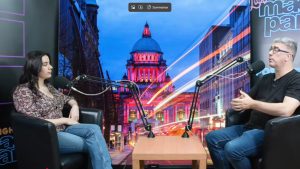
Category: Film & Video; Culture & Heritage
Programme: Made to Parade — Bandter, Episode 112
Presented by: Glenn Millar and Sarah Carlisle
Originally published: 19 July 2026
Introduction
The Loyalist marching-band tradition is one of the most distinctive elements of Ulster’s cultural heritage. Yet discussions surrounding these bands frequently concentrate on politics, parades and identity, while their musicianship, creativity and musical traditions receive considerably less attention.
In this fascinating episode of Made to Parade, Glenn Millar and Sarah Carlisle explore the musical abilities, creativity and knowledge developed within Northern Ireland’s marching-band community.
The conversation raises an intriguing question: How many people outside the band scene appreciate the musical talent that exists within it?
Musical innovation without formal training
One particularly interesting discussion begins approximately 1 minute and 20 seconds into the programme.
The presenters consider how individuals who have never received formal musical education, and who may not be able to read conventional musical notation, nevertheless compose, arrange and perform remarkably accomplished music.
Even more striking is their discussion of musicians developing alternative systems for reading, writing and interpreting music.
According to the conversation, some participants have devised entirely new ways of communicating musical arrangements, making them accessible to people without conventional musical training.
One speaker likens this achievement to developing an entirely new musical language.
These observations raise interesting questions about musical education, creativity and the transmission of knowledge within the marching-band tradition.
A musical tradition worthy of study
The significance of this discussion extends beyond the technicalities of musical notation.
For generations, marching bands have provided opportunities for musical participation, learning and community involvement.
The conversation highlights how musical knowledge can develop outside formal educational institutions, through practical experience, collaboration and the passing of skills between musicians.
There is considerable scope for further research into the distinctive musical practices of Ulster’s marching bands, including their arrangements, teaching methods and approaches to composition.
These musical traditions deserve to be documented and examined as an important part of Ulster’s cultural history, independently of the political controversies frequently associated with parading.
Watch the programme
Made to Parade — No Script, No Plan, Just Conversation | Bandter: Episode 112
The discussion of musicianship and alternative musical notation begins at approximately 1:20.
Watch the musical discussion on YouTube
(8) No script, No Plan, Just conversation | Bandter: Episode 112 – YouTube
Source
Made to Parade, Episode 112, presented by Glenn Millar and Sarah Carlisle, 19 July 2026.
The observations concerning alternative musical notation are attributed to the programme’s participants and are not presented as independently verified characteristics of every marching band.